Public Monument, 2025
Stone, engraving, site-specific mechanical installation
Location: Blücherplatz, Berlin

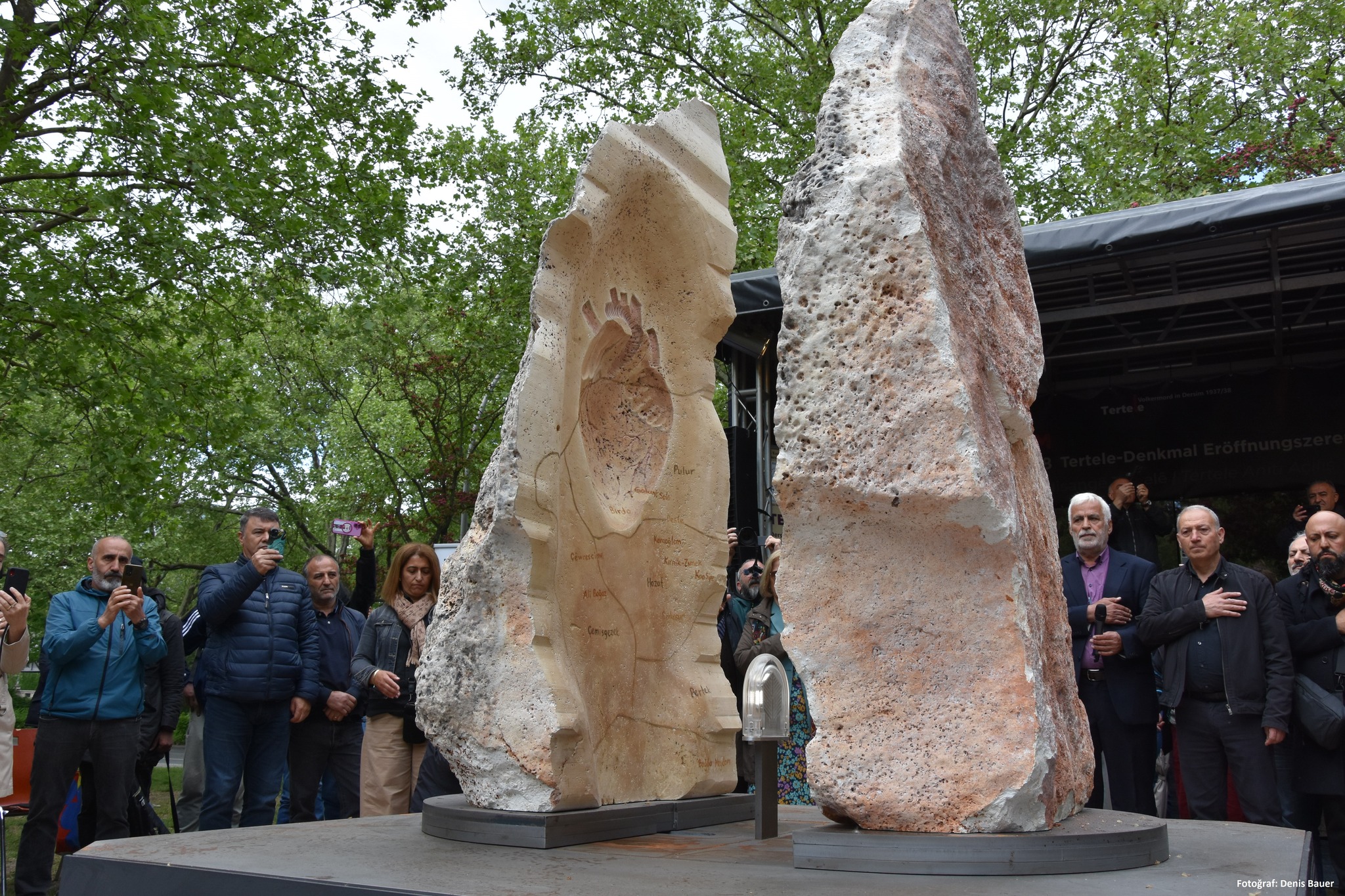
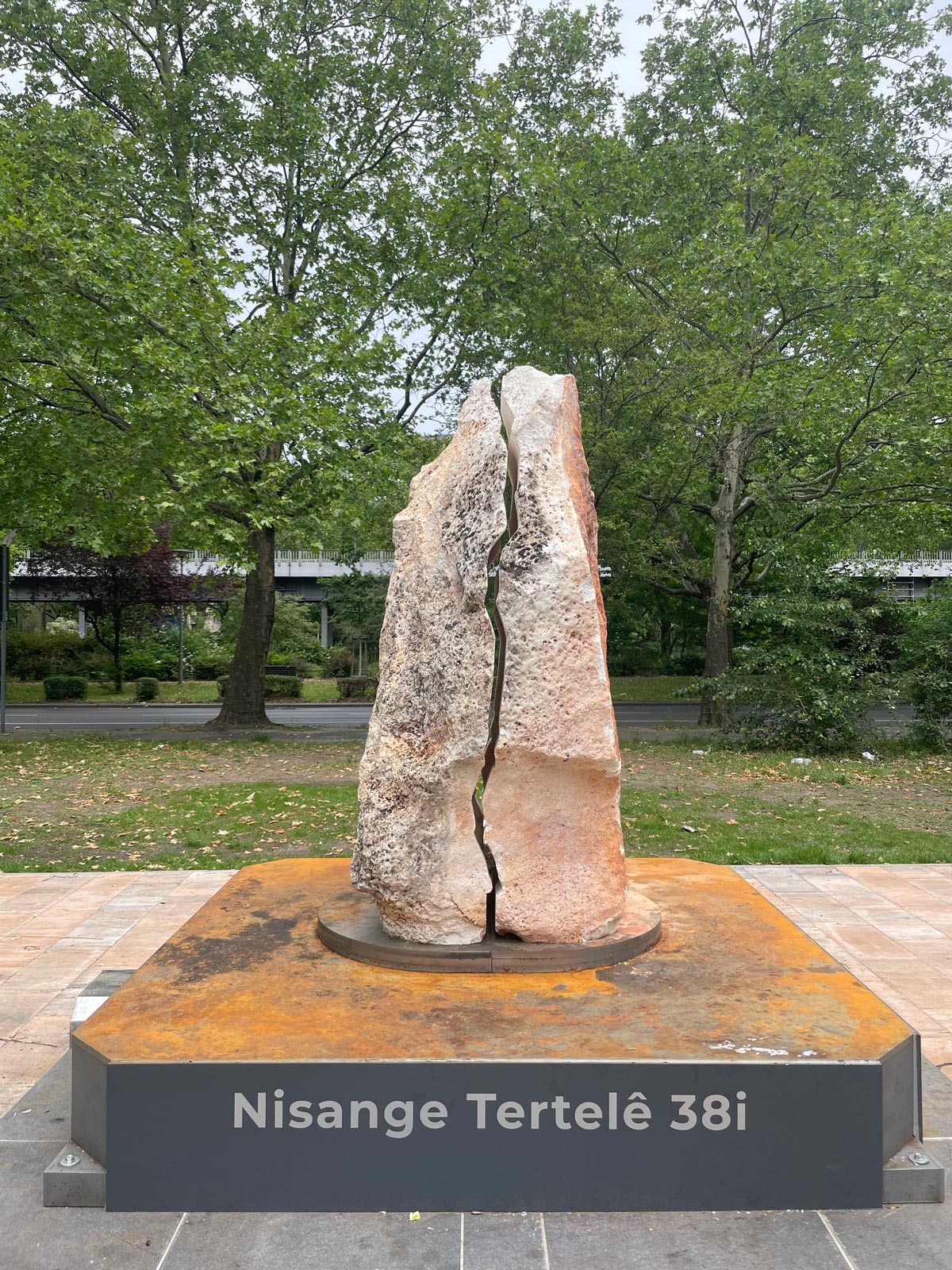
This monument is made from a large stone brought from Hozat, a site marked by the 1938 Dersim massacres. The stone becomes a vessel for memory, carrying collective trauma across geographies and into the present.
Read more…
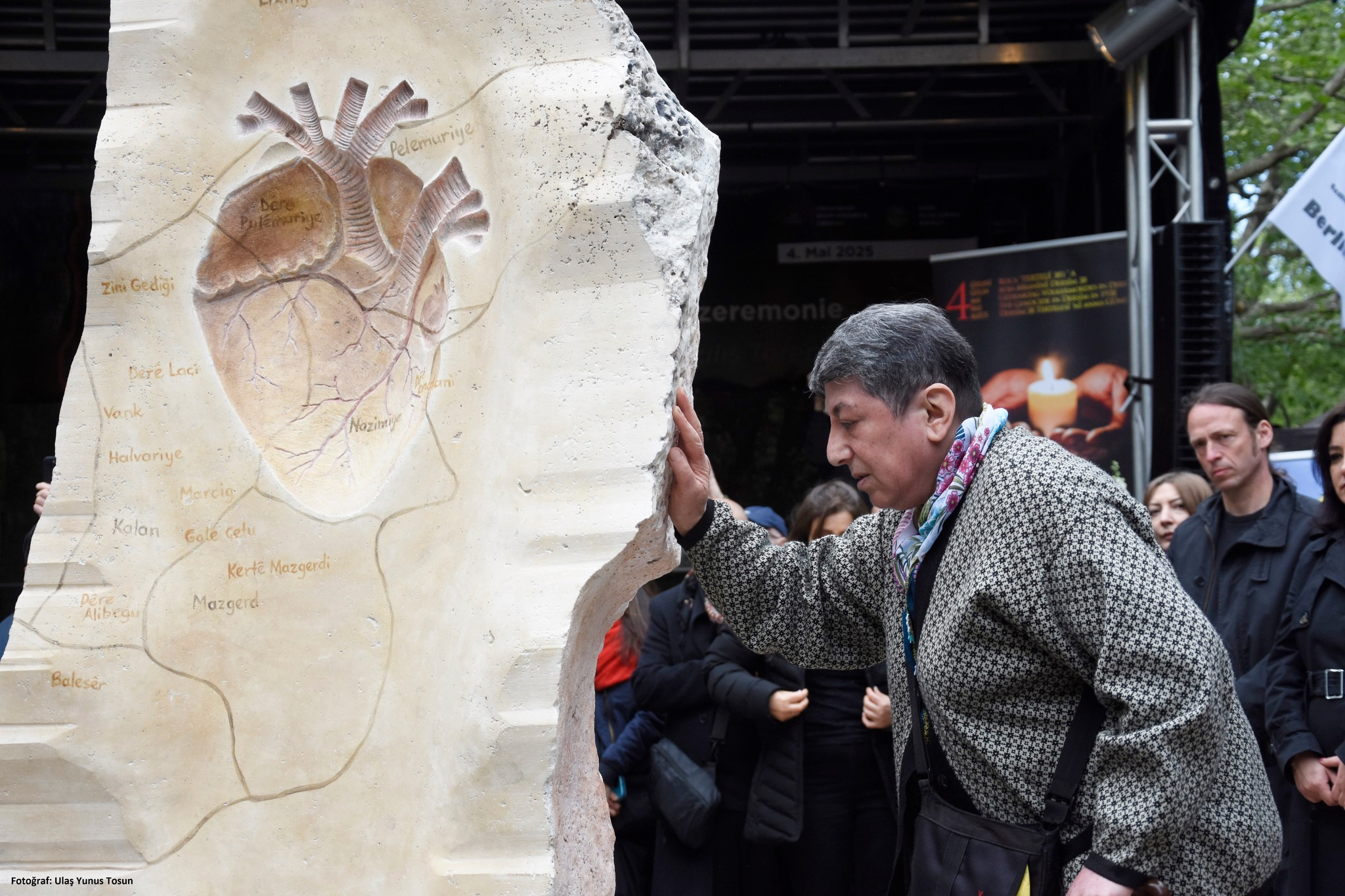
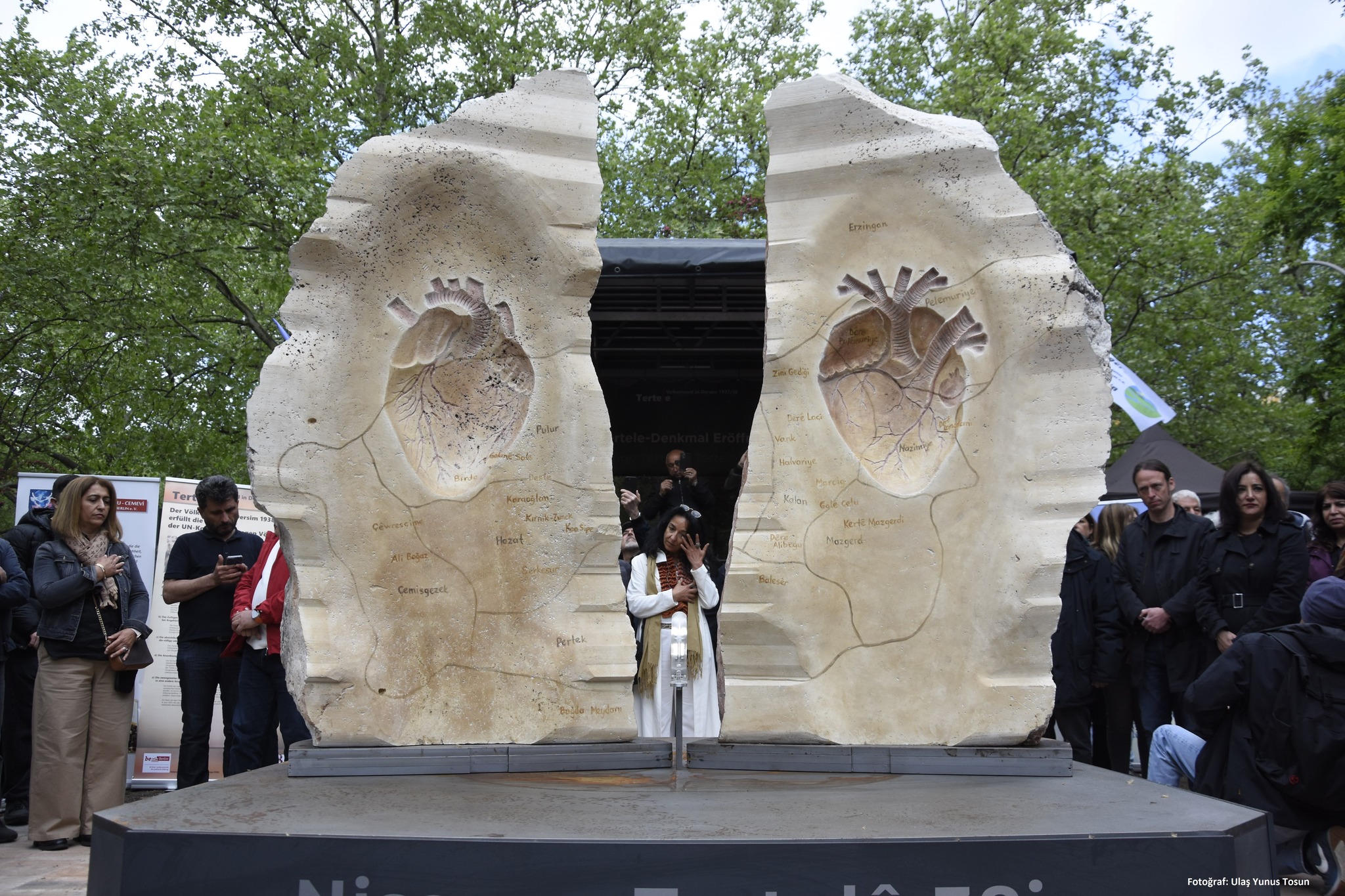
A deep fissure cuts through its body—an opening born from grief, but also a testimony etched in silence. It embodies both the cracks of loss and the act of witnessing that resists erasure. As a kinetic monument, the fracture divides the stone into two parts, each carrying a heart-shaped hollow. Through this gesture, the monument opens our hearts alongside the stone itself, inviting us to approach suffering not only as historical knowledge but as something to be felt at the level of the heart. The proverb “Even stone would crack from such sorrow” resonates here, connecting language, memory, and material.
Across its fractured surface are inscribed the names of places where massacres took place, forming a dispersed map of memory upon the stone itself.
Standing in public space, the monument becomes a site of collective remembrance—a place where the weight of erased histories can be felt, reflected upon, and perhaps shared. It invites not only mourning, but also listening, recognition, and the fragile possibility of coming together in the face of what has been broken but not forgotten.